

Journal · November 08, 2026
How to Find High Quality Streetwear: What to Check?
Last Updated: November 8, 2026
Quick Summary
To find high quality streetwear, check the fabric first: look for a stated fabric weight in GSM or ounces per square yard, a fiber composition, and construction details like straight seams and rib knit that springs back after stretching. A listing that gives these specifics is usually a safer buy than one that relies on logos or lifestyle photos alone.
- Confirm fabric weight is stated in GSM or ounces per square yard, since a missing number is a warning sign.
- Stretch the rib knit at cuffs and hem; if it stays stretched, expect it to bag out with wear.
- Check that the hood holds its shape without a drawcord, with a double-layer hood preferred.
- Read reviews for concrete outcomes like pilling, shrinkage or stretched ribbing rather than general praise.
- Buy from brand-owned or authorized sellers with a clear return window so you can inspect the garment.
Table of Contents
- Why Streetwear Quality Varies So Much
- What to Look for in Heavyweight Streetwear
- A Garment-by-Garment Quality Inspection Checklist
- How to Check Fit, Sizing and Hood Structure
- How to Find High Quality Streetwear Online
- Best Streetwear Websites and Where to Shop
- Best Streetwear Brands in 2026 and How to Compare Them
- Cost Per Wear, Care and Spotting Authentic Pieces
- Booking Your First Heavyweight Hoodie: Choosing Your Size and City
- Frequently Asked Questions
Why Streetwear Quality Varies So Much
Learning how to find high quality streetwear starts with understanding why two hoodies with the same logo can feel completely different. The global streetwear market is projected to reach $397.97 billion in 2026 according to Fortune Business Insights global streetwear market report. Estimates from other publishers differ widely, so treat any single market figure with caution. What matters more to a buyer is that growing demand brings many producers into the category, and their standards vary.
A hoodie can carry a strong graphic and still be thin, loose at the hood or quick to pill. Brands competing on design alone often leave those details to chance. That is why a shopper needs a repeatable way to judge a piece before buying it, not just a favorite logo.
Garment construction is where cheap and well-made pieces part ways. Seams, rib knit and hood structure all determine how a hoodie holds its shape after the first dozen washes. The sections below walk through what to check and how to check it.
What to Look for in Heavyweight Streetwear
Heavyweight streetwear is built on dense fleece that feels substantial in the hand and holds its shape on the body. The weight of a fabric is the clearest first signal of quality, and it is worth knowing how it is measured before you shop.
Fabric weight in GSM and ounces
GSM stands for grams per square meter, the standard way fabric weight is expressed internationally. In the US you will also often see ounces per square yard. A heavier fleece is denser and more durable, though it also runs warmer and stiffer.
When a listing gives no weight at all, that is a reason to ask the seller. A brand that prices a hoodie at a premium but will not state its fabric weight is asking you to trust a claim you cannot verify.
Fleece face, knit ribbing and recovery
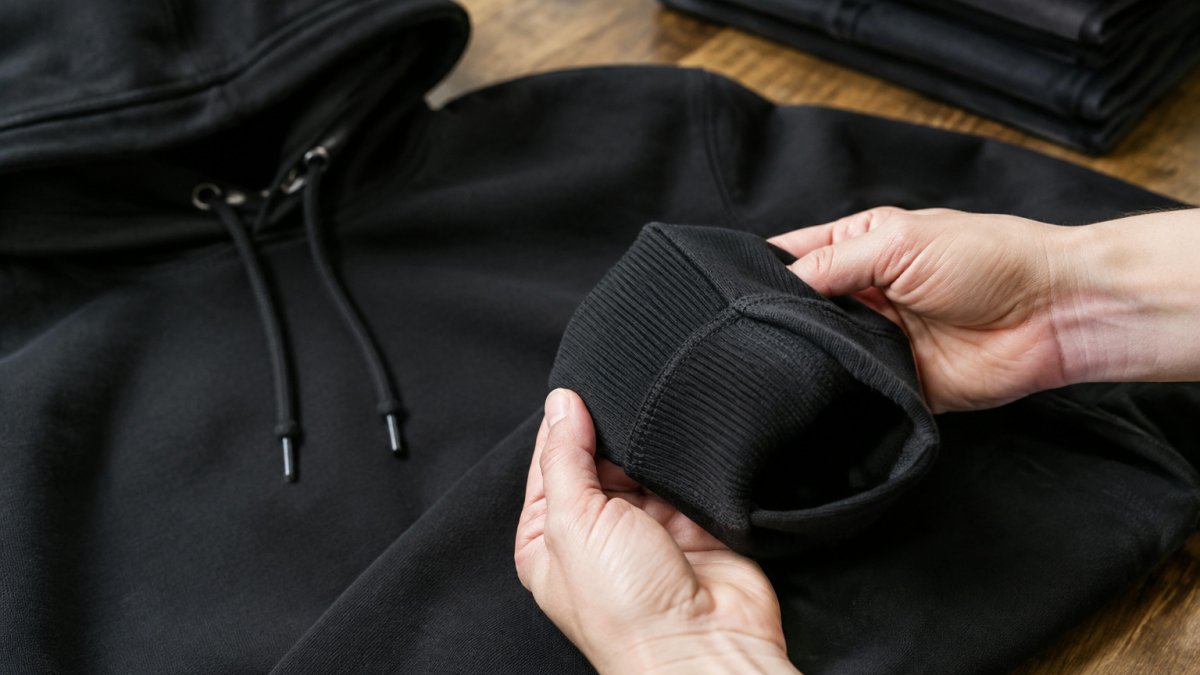
Look at the inside of the fleece as well as the outside. A brushed, even face usually indicates better finishing than a loose or patchy one. Rib knit at the cuffs and hem should spring back when stretched. If the ribbing looks flat or stays stretched after you let go, expect it to bag out after a few months of wear. Recovery in the rib is one of the simplest tests you can do in a store or when a parcel arrives.
A Garment-by-Garment Quality Inspection Checklist
Use this checklist on any piece before you commit to it. It works for hoodies, tees and jackets alike.
- Fabric weight is stated in GSM or ounces per square yard
- Fleece face is even, with no thin or bare patches
- Rib knit at cuffs and hem springs back after stretching
- Seams are straight, with stitching that looks tight and consistent
- Hood sits flat at the back and holds its shape without a drawcord
- Graphic prints look crisp, with no flaking edges in the photos
- Care instructions are listed and sensible for the fabric
Going through this list takes a few minutes.
How to Check Fit, Sizing and Hood Structure
Fit is where many shoppers get burned, especially those who are on the smaller side or who have been let down before. Start with a size chart and compare it against a garment you already own and like. Chest width, body length and sleeve length matter more than the size label, since labels differ between brands.
Hood structure is worth a close look. A well-built double-layer hood keeps its shape when you are not wearing it, while a single thin layer tends to collapse or slide down the back. Check whether the hood has a drawcord, and whether the design holds up without one. If you have experienced hoods that keep falling down, look for a stiffer inner layer and a clean attachment at the shoulder seam.
For detailed sizing guidance, see our Care & Fit page, which covers the relaxed unisex cut and our full size range from S to XXL.
How to Find High Quality Streetwear Online
Shopping online removes the chance to touch the fabric, so the listing has to do more of the work. The most useful skill here is not spotting a nice photo, it is verifying the claims a listing makes. Most top-ranking guides stop at "read the reviews." A repeatable verification method is what actually separates a good buy from a return.
Verify fabric claims before you trust them
Start with the fiber composition and the fabric weight. A credible listing states both, usually as a percentage blend (for example, 80% cotton / 20% polyester) and a weight in GSM or ounces per square yard. If a listing says "heavyweight" but gives no number, treat that as marketing until proven otherwise.
A common pattern is that premium-priced pieces publish weight and composition while budget listings omit them. When weight is missing, message the seller and ask directly. A brand that cannot or will not state the weight of its own fleece is telling you something.
Watch out: some listings quote the weight of the raw yarn or the fabric before washing rather than the finished garment, which can make a piece sound denser than it wears.
Read the construction details, not the lifestyle shots
Product photos should show the garment, not just a model in a scene. Look for close shots of the hood attachment, the cuff ribbing, the hem, and the inside of the fleece. A listing that only shows styled full-body images is hiding the details you need.
Zoom in on stitching where you can. Straight, tight, consistent seams and clean finishing at the neck and cuffs are the visual signature of a well-made piece. Loose threads, puckering, or uneven hems in the photos usually carry through to the garment you receive.
Screen reviews for specifics
Reviews are most useful when they mention a concrete outcome: pilling after a set number of washes, ribbing that stretched, a print that cracked, or how the actual measurements compared to the size chart. General praise ("great quality,") tells you almost nothing. Search the reviews for words like "wash," "shrink," "pill," and "return" to surface the useful ones quickly.
Check the seller and the return policy
Before you buy, confirm who is actually selling the item. Brand-owned stores and authorized retailers are the safest source for authenticity and accurate specs. On marketplaces, check the seller's history, whether the photos are original, and whether the return window is long enough to inspect the garment in person.
A clear, no-questions return policy is itself a quality signal: a seller confident in the product is more willing to take it back. If the policy is vague or the return shipping cost is punitive, factor that into the real price.
Compare listings side by side
When two pieces look similar, put the specs next to each other: fiber composition, weight, fit measurements, construction notes, and return terms. The listing with more verifiable detail is usually the safer buy, even at a higher sticker price. That comparison habit is the online equivalent of feeling the fabric in a store.
Best Streetwear Websites and Where to Shop
Where you buy affects what you can verify. Brand-owned websites usually give the most detail on construction and fabric, because the brand controls the description. Multi-brand retailers offer convenience and comparison, but the product detail varies by listing, so apply the checklist above to every item.
Marketplaces can surface many pieces, though authenticity and quality are harder to confirm. Buy from sellers who publish fabric details and clear return policies, and avoid listings that copy another brand's photos without showing the actual garment.
Best Streetwear Brands in 2026 and How to Compare Them
Comparing brands is easier when you use the same criteria for each one, and when you adjust those criteria by product category. A brand that makes an excellent heavyweight tee may still cut corners on denim or outerwear. Most ranking guides compare logos and hype; a category-by-category rubric is more useful.
A shared comparison rubric
For any brand, score these five things on the same scale:
- Fabric disclosure: Does the listing state fiber composition and weight?
- Construction detail: Are seams, ribbing, and hood or collar structure described or shown?
- Fit guidance: Are real garment measurements published, not just S-XXL labels?
- Finishing: Are prints, embroidery, and hardware shown close up?
- After-sale terms: Is there a clear return window and care guidance?
A brand that scores well across all five is usually a safer buy than one that wins on design alone.
Category-specific checks
Tees. Look for a stated fabric weight and a ribbed collar that holds its shape. A collar that stretches out is the most common failure point on a graphic tee, so check whether the brand shows or describes a reinforced neck.
Hoodies. Weight, hood structure, and rib recovery matter most. A double-layer hood and ribbed cuffs that spring back are the markers of a piece that will keep its shape.
Denim. Check the stated fabric weight in ounces, the type of selvedge or non-selvedge construction, and whether the brand publishes shrinkage guidance. Raw denim behaves differently from pre-washed, and the listing should say which you are buying.
Outerwear. Look at the shell fabric, the lining, and the hardware (zips, snaps, toggles). A brand that names its zipper supplier or describes the lining is usually more transparent about the rest of the build.
Accessories. For caps and bags, check stitching at stress points, hardware finish, and whether the material is described specifically rather than as "premium fabric."
Independent labels versus larger brands
Independent and emerging labels often lead on design and story, and some publish unusually detailed specs because they are competing on craft. Larger brands tend to offer more consistent sizing and easier returns. Neither is automatically better, decide which of the five rubric items matters most to you and weight accordingly.
Applying the rubric to our own line
For us, the priority is heavyweight fabric with careful construction and a clear fit. Our Tokyo Hoodie is a heavyweight 10 oz (340 GSM) fleece with a double-layer hood, rib-knit cuffs and hem, and an oversized fit, priced at $128.00. If you want to see the full range, our City Collection is available to browse. For a closer look at what separates a premium hoodie from the rest, read our guide to what makes a hoodie feel premium.

| Criteria | What to Check | Why It Matters |
|---|---|---|
| Fabric weight | GSM or oz/yd² stated | Density and durability |
| Ribbing | Springs back after stretch | Keeps cuffs from bagging |
| Hood | Double layer, holds shape | Stays up in wear |
| Fit | Measurements, not just labels | Predictable sizing |
| Returns | Clear window and terms | Lets you inspect in person |
Use the same table on any brand you are considering. The brand that answers more of these questions in its listings is usually the one worth your money.
Cost Per Wear, Care and Spotting Authentic Pieces
A higher price is only worth it if the piece lasts. Cost per wear is simple to calculate: divide the purchase price by the number of times you expect to wear it. A $128 hoodie worn 100 times costs about $1.28 per wear.
Care affects lifespan as much as construction. Wash inside out in cold water, avoid high heat in the dryer and follow the label. These habits protect prints and ribbing.
To spot authentic pieces, check that the brand name, labels and stitching match the brand's own product photos, and buy from the brand directly or from authorized retailers where possible. Be cautious of prices far below the market rate for the same design.
Booking Your First Heavyweight Hoodie: Choosing Your Size and City
Choosing your first heavyweight hoodie comes down to two decisions: size and design. Start with the fit guidance above, then pick the city that speaks to you. Each piece in our City Collection carries its own plate, from New York and London to Tokyo and Mexico City.
Our hoodies ship with free US ground shipping and are made to order, typically within about a week. Start with the piece that reflects a place you know, and let the fit and weight confirm whether heavyweight streetwear suits your everyday wear.
Frequently Asked Questions
Where can I buy high quality streetwear?
Look for online retailers that publish fabric weight in GSM or ounces, list the fabric blend and show close-up photos of seams, hoods and cuffs. Brand-owned sites usually give the most detail on construction. Marketplaces can work too, but only if the listing includes these specs and a clear return policy. Compare the product page against the checklist in this guide before buying, and treat vague descriptions like 'premium feel' as a warning sign rather than proof of quality.
How can you tell if streetwear is well made?
Check the fabric weight first. Heavier fleece usually feels more substantial and holds shape better than lighter cotton. Then inspect the stitching for even, tight lines without loose threads, examine the hood for a double-layer structure that keeps its shape, and press the rib-knit cuffs and hem to confirm they spring back. Finally, look at the print: edge-to-edge graphics should be smooth without cracking in photos of the garment.
What should I look for when buying heavyweight streetwear?
Start with the weight, listed in GSM or ounces per square yard. Confirm the fabric composition, since a higher cotton content typically means a softer hand feel but more shrinkage, while blends can improve shape retention. Check the fit description for dropped shoulders or an oversized cut, and read the care instructions. A heavyweight piece should feel dense, not stiff, and should come with clear sizing measurements so you can compare it to a garment you already own.
How do I find reliable streetwear websites?
Reliable sites publish specific material details, show real photos from several angles, provide measurement charts and state their shipping and return terms clearly. Be cautious of sites that rely only on lifestyle imagery with no specs. Check whether the brand is easy to contact and whether its policies appear before checkout. Reading recent customer reviews that mention fabric, fit and durability over several washes is also useful.
Are expensive streetwear brands always better quality?
Not necessarily. Price often reflects brand demand, design and marketing as much as construction. A higher price is worth paying when it buys heavier fabric, tighter stitching, a structured hood and durable finishing. Judge each piece by its specifications and inspection results rather than the label. A mid-priced garment with strong specs can outperform a costly one with vague details.
How do I know which size to pick for an oversized streetwear hoodie?
Measure a hoodie you already own that fits well, including chest width and body length, and compare those numbers with the brand's size chart. Oversized cuts with dropped shoulders run larger by design, so the chart matters more than your usual size label. If you are between sizes or have a smaller frame, check the listing for the garment's exact measurements and whether the cut is intentionally relaxed.
