

Journal · November 05, 2026
How to Stop Hoodie Hoods from Falling Down
Last Updated: November 5, 2026
Quick Summary
Hoodie hoods fall down because the fabric is too light to hold its shape, the hood is cut too shallow for the neckline, or the drawstring tension is uneven. The fastest fix is to tighten the drawstring evenly, fold the inner edge of the hood into the neckline, and add a small anchor stitch at the back.
- Light fabric is the number one culprit behind hoods that collapse and pull at the neckline.
- Hood depth should match neck circumference, with enough fabric behind the head to create friction.
- Loosen both drawstrings fully, then pull them evenly so tension is balanced.
- Wash cold and skip the tumble dryer to protect the hood's shape.
- Heavy fleece is the best-behaved hood fabric because its bulk and brushed interior create natural friction.
Table of Contents
- The Real Reasons Hoodie Hoods Fall Down
- How to Fix a Hoodie Hood That Falls Back
- What Makes a Hoodie Premium Quality: Construction Details That Keep the Hood Up
- Fabric-Specific Solutions for Hood Slippage
- When to Consider Professional Tailoring for Hood Fit
- Choosing a Hoodie That Stays Put
- Frequently Asked Questions
The Real Reasons Hoodie Hoods Fall Down
Hoodie hoods fall down because the fabric is too light to hold its shape, the hood is cut too shallow for the neckline, or the drawstring tension is uneven. Gravity does the rest. According to Market Data Forecast's hoodies market report, the global hoodie market hit USD 109.15 billion in 2025, yet this small design flaw still frustrates almost every wearer. At Love Food N' Music, we build heavyweight hoodies in the 400-450 GSM range, with hood structure as a core focus. Below, we explain exactly why hoodie hoods slip, plus the fixes that actually work.
Fabric weight and balance
Light fabric is the number one culprit. Thin, low-quality hoods collapse awkwardly and pull at the neckline, according to BreakingAC's report on hoodie durability. Heavier fleece holds its shape and resists gravity far better. Balance matters too: a heavy hood on a light body drags backward all day.
Hood depth and neck circumference
A hood that is too shallow for the neckline has nowhere to sit. It rolls back the moment you move. Hood depth should match neck circumference, with enough fabric behind the head to create friction against the shoulders.
How to Fix a Hoodie Hood That Falls Back
The fastest fix for a hoodie hood that falls back is to tighten the drawstring evenly, fold the inner edge of the hood into the neckline, and add a small anchor stitch at the back. Here is the step-by-step version we recommend:
- Loosen both drawstrings fully, then pull them evenly so tension is balanced.
- Fold the inner front edge of the hood into the neckline to create friction.
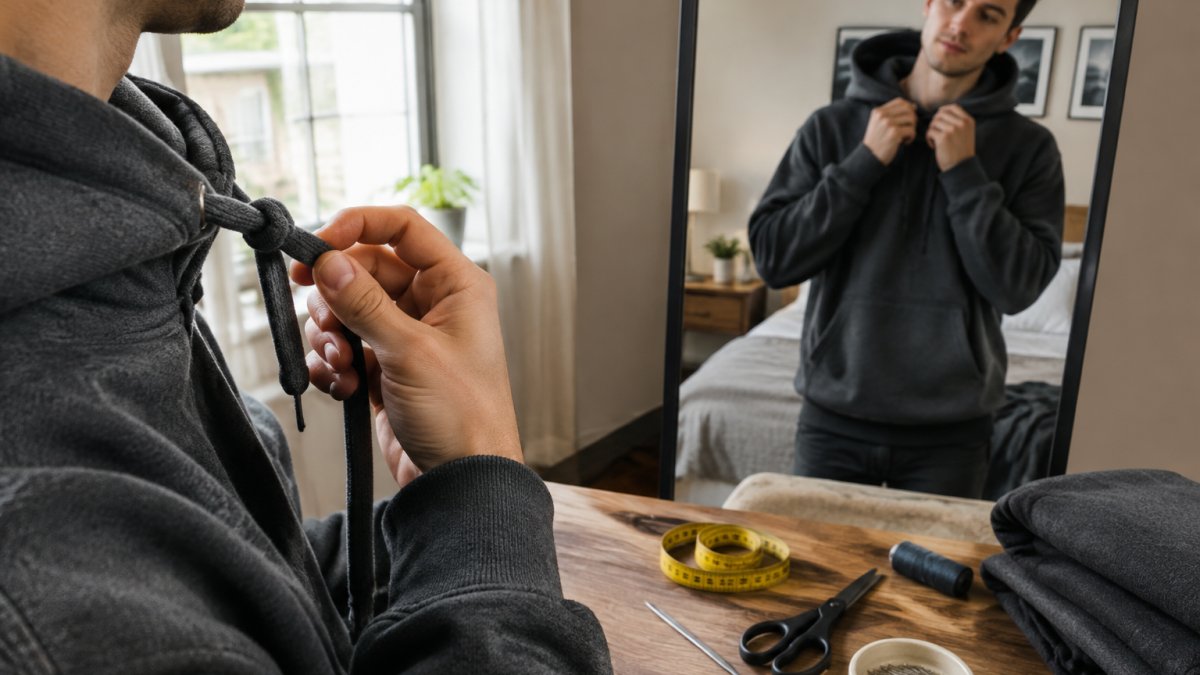
- Pin a small tuck at the center back seam and test the fit in a mirror.
- Sew a hidden stitch or add fusible interfacing to stiffen a limp hood.
- Wash cold and skip the tumble dryer to protect the shape.
What Makes a Hoodie Premium Quality: Construction Details That Keep the Hood Up
Premium hoodie quality comes down to three construction details: fabric weight, hood structure, and rib recovery. A hood with a double-layer panel, a reinforced seam at the neckline, and a sturdy drawstring channel holds its shape. Thin single-layer hoods flatten within weeks. For a deeper breakdown, see what makes a hoodie feel premium, where we cover weight, softness, hood structure, rib, and print feel.
Fabric-Specific Solutions for Hood Slippage
Hood slippage is a fabric problem before it is a fit problem. The same fix that rescues a cotton-blend hood can ruin a heavy fleece one, because each fabric fails differently under gravity and wash cycles. Here is how to match the remedy to the textile.
Cotton and cotton-rich blends. Cotton has low elastic recovery, so a hood cut from a light cotton jersey or thin French terry stretches at the neckline and rolls backward within a few wears. The most reliable fix is fusible interfacing: a lightweight knit-friendly fusible trimmed to the shape of the hood's front edge and bonded to the inside face stiffens the panel without adding visible bulk.
Polyester and polyester blends. Polyester resists stretching but is slick, so a polyester hood tends to slide rather than sag. Friction is the lever here: a snugger drawstring, a folded inner edge, and a strip of silicone-backed grip tape sewn inside the front band all increase resistance against the shoulders.
Fleece and brushed-back terry. Heavy fleece is the best-behaved hood fabric because its bulk and brushed interior create natural friction, but it is also the hardest to alter. A fleece hood that still falls back is usually cut too shallow, not too limp, so the fix is structural: a stronger anchor stitch at the back neck, or a tailor resetting the neckline seam.
Terry cloth and loopback. Loopback terry slips the most of any common hoodie fabric. The loops give the fabric a slick hand and little body, so the hood collapses forward and back with every head turn. Pull the drawstring snug, fold the inner edge into the neckline, and consider a lightweight interfacing strip along the front band.
Whatever the fabric, check the care and fit guidance before you alter or wash it, so you do not shrink the hood or damage the seam. A simple test before you commit to a fix: pinch the hood's front edge between thumb and forefinger.
When to Consider Professional Tailoring for Hood Fit
Tailoring is the permanent fix, and it is worth the trip when the hood is structurally sound but the geometry is wrong. The clearest signal is a hood that falls back even when the fabric is heavy and the drawstring is balanced: that points to a shallow cut or a neckline seam set too wide, and no amount of washing or tugging will change it.
A competent tailor has four levers for hood fit. First, shortening a too-deep hood by taking in the center back seam, which pulls the hood closer to the skull and reduces the pendulum effect. Second, adding interfacing to the front band or the full hood panel to give a limp fabric body. Third, resetting the neckline seam so the hood attaches at a tighter curve, which is the fix for hoods that sit too far back on the shoulders. Fourth, replacing or re-channeling the drawstring when the original channel is too wide and the cord slips loose.
A neckline reset is a more involved job than a simple hood alteration because it means opening the shoulder seam. Ask for a quote before you commit, and bring the hoodie worn over the layer you normally wear underneath, since fit changes with what is beneath it.
Skip tailoring if the fabric itself is too thin. No alteration fixes weak textile: interfacing a light jersey hood buys a few weeks before the fabric stretches again. The same logic applies to a hood that is simply too small for your head shape; a tailor can let out a seam by a limited amount, but cannot add fabric that is not there. For most shoppers, the better move is to buy a hoodie with a deep, structured hood from the start and reserve tailoring for the one or two pieces worth keeping long term. If you are unsure whether your hood is a candidate, compare it against the construction benchmarks in what makes a hoodie feel premium before you spend on alterations.
Choosing a Hoodie That Stays Put
The best hoodie for a hood that stays up is one built with heavyweight fabric, a deep structured hood, and strong rib recovery from day one. According to Fortune Business Insights' market projections, the hoodies and sweatshirts market is set to grow from USD 256.08 billion in 2026 to USD 442.64 billion by 2034, and shoppers are getting pickier about construction. Most people need a rotation of 4-6 hoodies, so choose each one well.
| Problem | Fix | Effort |
|---|---|---|
| Light fabric collapses | Choose 400+ GSM fleece | Buy once |
| Hood too shallow | Tailor or fold inner edge | Low |
| Uneven drawstring | Retie evenly, add anchor stitch | Low |
| Limp hood | Fusible interfacing | Medium |
| Baggy rib cuffs | Cold wash, air dry | Ongoing |
Our City Collection is built for exactly this: 400-450 GSM heavyweight fleece, intentional fit, and hood structure designed to hold. Check the size and fit guide for sizing, then browse the full City Collection for current pricing and free US shipping details.
Frequently Asked Questions
How to stop a hood from falling off?
Start with the drawstring: tighten it evenly so the hood grips your head without choking. If that fails, fold the inner edge of the hood into the neckline to create friction. For a permanent fix, add a few stitches at the anchor points where the hood meets the collar, or use fusible interfacing to stiffen the front band. Heavier fabrics like 400-450 GSM fleece hold shape better than thin cotton blends, so upgrading the garment often solves the problem outright.
Does fabric weight affect how a hoodie hood sits?
Yes. Lightweight hoods (under 300 GSM) lack the structural integrity to stay upright and tend to collapse backward. Heavier fabrics in the 400-450 GSM range give the hood enough body to hold its shape while still draping comfortably. The trade-off is warmth and stiffness, but for everyday wear the weight distribution keeps the hood balanced on your head rather than pulling at your neckline.
Why do cheap hoodies lose their shape after washing?
Low-quality hoodies often use short-staple cotton and weak seams that distort in the washing cycle. Tumble drying accelerates the damage, causing the hood to flatten and the rib cuffs to stretch out. Wash heavyweight hoodies cold and air-dry them to preserve fabric recovery. If the hood has already flattened, try misting it with water and reshaping it by hand before letting it dry flat.
How to fix a flattened or misshapen hoodie hood?
Mist the hood with water until damp, then reshape it by hand and lay it flat to dry. For stubborn cases, iron on low heat with a pressing cloth, focusing on the front band to restore structure. Adding fusible interfacing to the inner hood edge can prevent future flattening. If the distortion comes from poor seam construction, a tailor can reinforce the anchor points for a more permanent fix.
A hood that stays up should be the baseline, not a lucky find. Love Food N' Music builds heavyweight hoodies with structured hoods, strong rib recovery, and intentional fit, so the shape holds wash after wash. Get started with Love Food N' Music and wear a hoodie that finally stays put.
