

Journal · November 10, 2026
Which Hoodies Don't Pill? Fabric and Construction Guide
Last Updated: November 10, 2026
Quick Summary
Look for hoodies that don't pill by checking fiber content first, then knit density, yarn construction and seam quality. Longer, stronger fibers and tightly knit fabric hold their surface better than loose cotton. Wash cold, inside out, and air dry to keep the surface smooth.
- Check the label for a stated fiber percentage; cotton-polyester blends resist abrasion better than all cotton.
- Hold the fabric to a light and look for gaps; a tighter knit traps fibers more securely.
- Judge durability by pilling resistance, seam strength, colorfastness and shape retention, not weight alone.
- Wash on a gentle cycle in cold or lukewarm water, turned inside out, and skip fabric softener.
- Air dry flat or hung inside out, because high heat in a tumble dryer encourages pilling.
Table of Contents
- Fiber content: cotton, polyester, and blends
- Hoodie Fabric Quality: What to Check Before You Buy
- Heavyweight Hoodie Durability: Why Weight Alone Is Not Enough
- How to Prevent Pilling on Sweatshirts Through Washing and Care
- Choosing Your Pill-Resistant Hoodie and Keeping It Soft
- Frequently Asked Questions
Hoodies that don't pill are easier to find than most shoppers expect, but only if you know what to look for when shopping for hoodies that don't pill. Pilling is the tiny ball of fiber that forms on the surface of a sweatshirt after repeated friction, and it is one of the fastest ways a good hoodie starts to look tired. This guide walks through what causes it and how to judge a hoodie before you buy.
Pilling starts when loose fibers work their way to the surface of the knit and tangle together under friction. Short fibers are the usual culprit, because they pull free more easily and bunch up into balls. Nottingham Trent University researchers note that technical experts generally consider designing garments to avoid pilling during normal use and care more promising than trying to address pilling through other approaches Strategies to improve design and testing for clothing longevity. That points shoppers toward construction and fiber choices, not just a finish applied after the fact.
Fiber content: cotton, polyester, and blends
Fiber content is the first thing to check on a hoodie label. Cotton is soft and breathable, but its shorter staple fibers can loosen and pill more readily than longer, stronger fibers. Polyester is more resistant to abrasion, so blends that include it often hold their surface better over time. A cotton-polyester blend tries to balance comfort with durability, which is why many everyday hoodies use it. Look for a stated fiber percentage rather than a vague "premium cotton" claim.
Yarn and knit construction
Fiber content only tells part of the story. Yarn twist, ply, and how tightly the fabric is knit all affect how much surface fiber breaks loose. A tighter, well-constructed knit traps fibers more securely, while a loose knit lets them migrate. Fleece versions such as brushed fleece and grid fleece behave differently, so the knit structure matters as much as the fiber on the label.
Hoodie Fabric Quality: What to Check Before You Buy
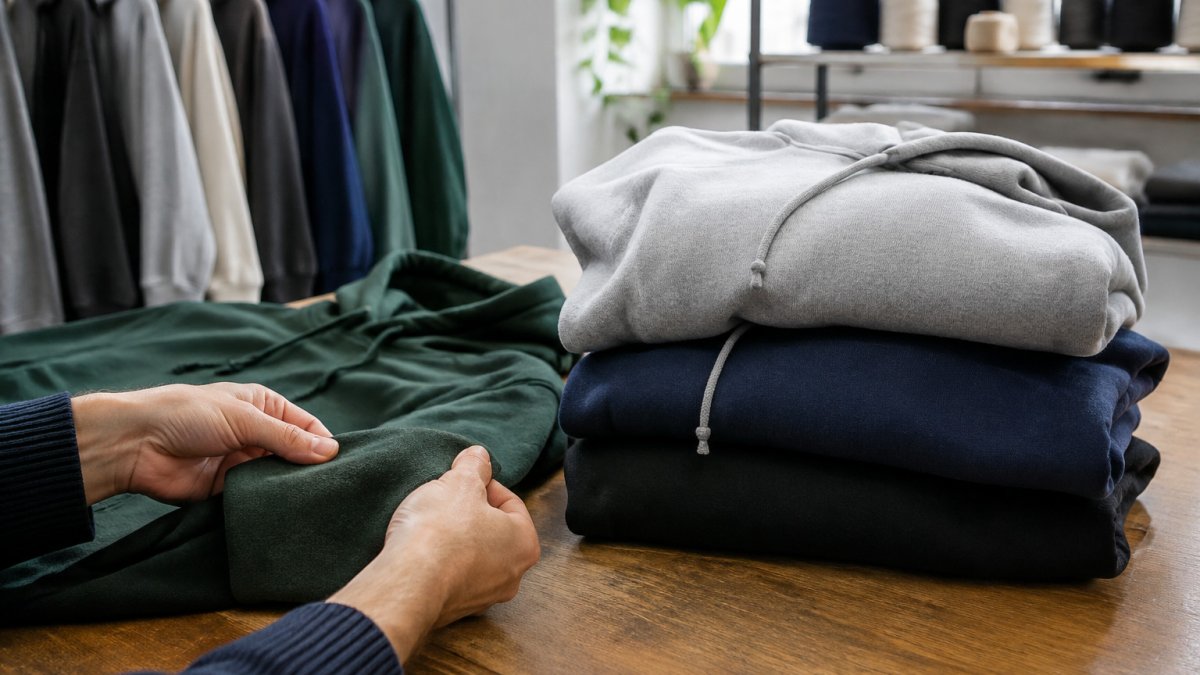
A hoodie's fabric tells you a lot before you ever wear it. Hold the fabric up to a light and look at the density of the knit. Gaps you can see through usually mean a looser construction that will pill faster. Rub a small patch between your fingers: a surface that feels smooth and tight is a better sign than one that already feels fuzzy.
Weight is one signal among several. Heavier fabric usually means more material per square inch, which can help a garment hold its shape. Check the stated fabric weight in grams per square meter (GSM) alongside the fiber content, not on its own.
Watch for loose stitching along the seams and around the hood, too. Reinforced seams and a sturdy hood structure keep a garment looking intentional after months of wear. Pay attention to the rib at the cuffs and hem as well, since good rib recovery is what keeps those areas from going baggy.
Heavyweight Hoodie Durability: Why Weight Alone Is Not Enough
Fabric weight, usually stated in grams per square meter (GSM), measures how much material is packed into a given area. It tells you how thick and warm a hoodie will feel. It does not tell you how well the fabric resists pilling, how long the seams will hold, or whether the garment will keep its shape. Those depend on fiber length, yarn structure, knit density, and finishing, and a heavy hoodie can fail on any of them.
Durability is better understood as several separate measures. Pilling resistance describes how the surface holds up to abrasion. Seam strength describes whether stitching at the shoulders, underarms, and hood pulls apart under stress. Colorfastness describes whether dye survives repeated washing without fading or bleeding. Shrinkage and shape retention describe whether the garment keeps its dimensions and whether the hood and cuffs recover after stretching.
Fiber length plays a large role in pilling. Longer staple fibers are more tightly anchored in the yarn, so they are less likely to work loose and form balls. Yarn twist and ply affect the same outcome, because tightly twisted, multi-ply yarns hold fibers in place more securely than loosely spun singles.
To evaluate a heavyweight hoodie in practice, look at the label for fiber content and weight together, then check the construction directly. Hold the fabric to a light to judge knit density. Examine the seam allowance and stitch density at the shoulders and underarms, since these are the points where failure usually starts. Check that the hood has enough structure to keep its shape and that the rib at the cuffs and hem has real elasticity rather than feeling limp.
If a brand makes a durability claim, ask what it is based on. Testing that reports a pilling grade, a seam strength figure, or a wash-cycle count gives you something to compare. A claim with no method behind it tells you much less, however heavy the fabric feels in the hand.
How to Prevent Pilling on Sweatshirts Through Washing and Care
Pilling is mostly a friction problem. Each time a hoodie rubs against a wall, a dryer drum, or another garment, fibers that are already loose get pulled further out of the knit and begin to tangle.
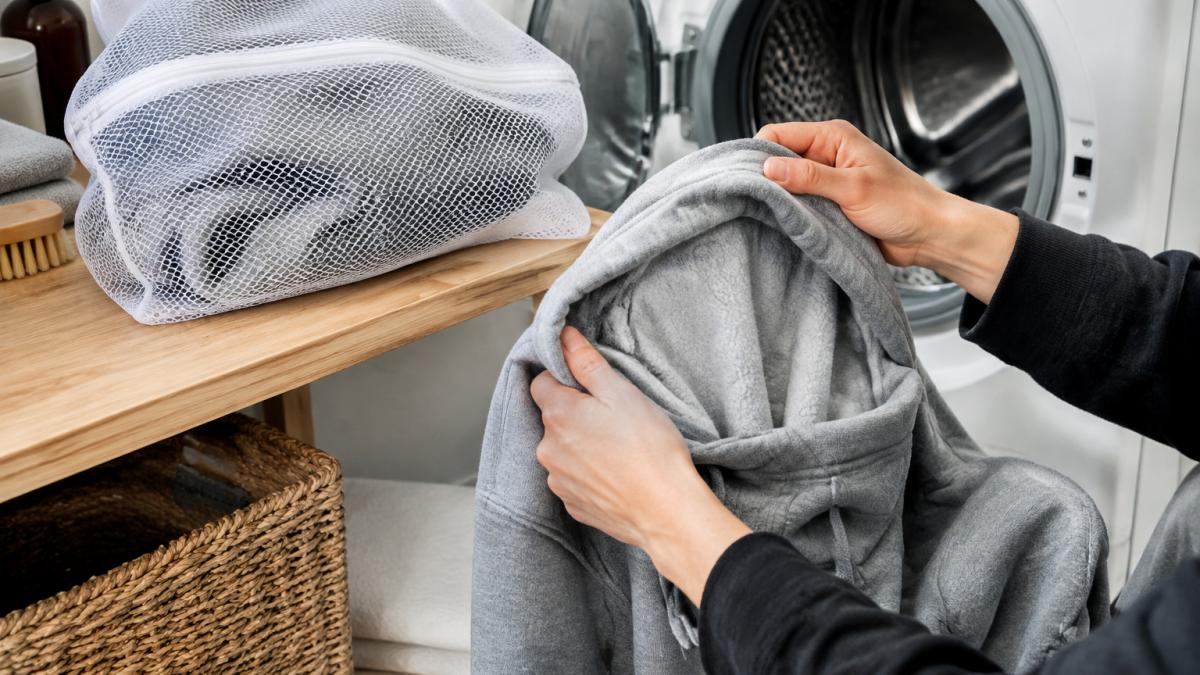
Washing. Turn the hoodie inside out before it goes in the machine. This keeps the brushed or napped face of a fleece from rubbing against the drum and against the zipper teeth or drawstring hardware.
Detergent. Use a standard liquid detergent at the dose on the label, and avoid overdosing. Residue left in the fabric can make fibers stiffer and more likely to break at the surface. Skip fabric softeners, which coat fibers and can reduce the grip that keeps the knit tight, and which many fleece manufacturers advise against.
Drying. Heat is what most often turns a slightly fuzzy hoodie into a visibly pilled one. Tumble drying on high weakens fibers and encourages them to migrate. Air drying, laid flat or hung inside out, is the gentlest option. If you must use a dryer, choose the lowest heat setting and remove the garment while it is still slightly damp.
Storage and wear. Rubbing against a bag strap, a backpack, or a car seat belt causes the same abrasion as a washer. Fold hoodies rather than hanging heavy knits on thin hangers, which can stretch the shoulders and cause uneven surface wear.
Watch out: a hot dryer cycle can set in pilling that cold washing and air drying would have prevented, so the drying step matters as much as the wash.
Our Care & Fit guidance covers the specific care steps for our hoodies, including how to maintain fit and softness over time.

The steps below summarise the care habits that reduce friction and pilling, with the drying stage flagged as especially important.
| Stage | What to do | Why it matters |
|---|---|---|
| Washing | Turn inside out, use gentle cold or lukewarm cycle | Reduces drum and zipper friction |
| Detergent | Use standard liquid at label dose | Avoids residue that stiffens fibers |
| Softener | Skip fabric softener | Coating can reduce knit grip |
| Drying | Air dry flat or hung inside out | Heat weakens fibers and encourages pilling |
| Dryer use | Lowest heat, remove slightly damp | Limits fiber migration if drying by machine |
| Storage | Fold heavy knits, avoid thin hangers | Prevents stretching and abrasion |
| Removing pills | Use a fabric shaver on a flat surface | Removes pills without cutting base fabric |
Choosing Your Pill-Resistant Hoodie and Keeping It Soft
Start with fiber content, then check the knit and construction, and only then weigh the fabric. A well-built hoodie with a dense knit, reinforced seams, and solid rib will outlast a heavier one that skimps on construction. Once you have one you like, the habits above, cold washing, inside-out drying, and air drying, will keep the surface smooth and the hood in shape.
If you are ready to compare options, explore our heavyweight hoodie options and choose the piece that fits your wardrobe.
Frequently Asked Questions
What are the best hoodies that don't pill?
Hoodies that resist pilling usually combine long-staple cotton or a higher-quality polyester blend with a tight knit and reinforced stitching. Look for fabrics made from longer fibers, which hold onto fewer loose ends during friction. Compare the fiber content on the label, check the knit density, and read reviews that mention wear after several months rather than first impressions. Brand claims about anti-pill treatments are worth verifying with the retailer's testing details before you pay a premium.
Does heavyweight fabric pill less than lightweight fabric?
Not necessarily. Fabric weight measures mass per area, so a heavier hoodie can still pill if its fibers are short or its knit is loose. Weight does tend to correlate with a dense, substantial feel, which often means more fabric to wear through before holes appear, but it is not a reliable pilling test on its own. Check fiber content, knit structure, and the quality of the surface finish alongside the GSM number.
How should you wash a hoodie to help prevent pilling?
Turn the hoodie inside out, wash it on a gentle cycle in cold water, and use a mesh laundry bag to reduce rubbing against other garments. Avoid overloading the machine and skip fabric softeners, which can weaken fibers over time. Tumble dry on low or hang to dry, because high heat accelerates fiber breakdown. These habits slow the surface abrasion that causes pills to form.
Do polyester hoodies pill?
Yes, polyester can pill, and it is often more prone to it than cotton because its fibers are smooth and synthetic fibers can bind into balls when they rub. Blends of cotton and polyester tend to balance softness with resistance, and the quality of the yarn matters more than the fiber name alone. Turning the hoodie inside out for washing and avoiding high-heat drying help polyester blends hold up better.
